Some projects are more than business.
They are a mission.
Three years ago, a journey began that pushed us to our limits.
Paperwork. Permits. Conversations across continents. Doubt. Hope. Waiting.
And then — on February 11th, 2026 — it finally happened.
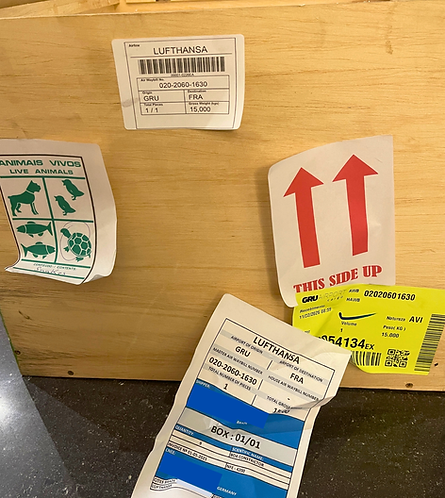
In São Paulo, Brazil, they were loaded (SRU-Airport).
Rare red-tailed boas and short-tailed boas, whose parents are exact locality wild-caught animals — a genetic treasure that has not legally entered Europe in decades.
A first.
The first legal import of its kind in decades.
That night was long.
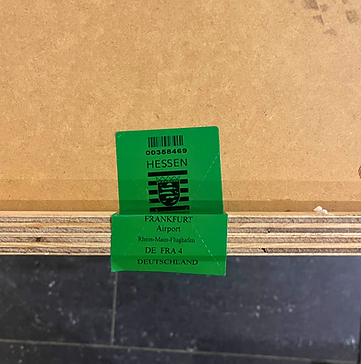
On February 12th, 2026, the plane landed in Frankfurt (FRA-Airport).
Those hours of waiting at the airport are hard to describe.
You know you’ve done everything right. And yet, you still hold your breath.
Then the moment.
The crates are opened.
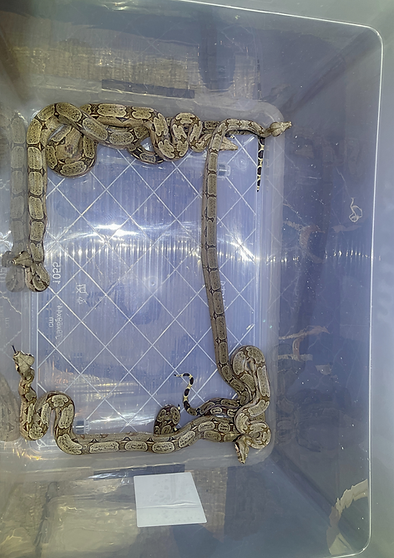
All animals appear healthy.
Stable. Composed. Powerful.
After such a long journey, they are still dark in coloration — a completely natural response to stress and temperature change. Now their acclimation begins. Warmth. Quiet. Quarantine. Time.
In the coming months, they will transform.
They will brighten. Their patterns will emerge. Their true character will unfold.
What we can share today are only spontaneous arrival photos — no staging, no perfect lighting. Just the raw, authentic moment after crossing the Atlantic.
But behind these images lies so much more:
-
Three years of patience
-
Bureaucratic hurdles on two continents
-
Trust in our partners on site
-
And an unwavering commitment to doing it right and legally
This import is not a trend.
It is a statement.
For responsible, legal animal keeping.
For transparency.
For genetic diversity with traceable origins.
Today, they stand safely in quarantine.
And we are simply grateful.
For the trust.
For the opportunity.
And for this historic moment.
The journey was long.
But it was worth it.
Boa c. constrictor F1
Location: Atlantic Coast Brazil (Natal City & Maceió)
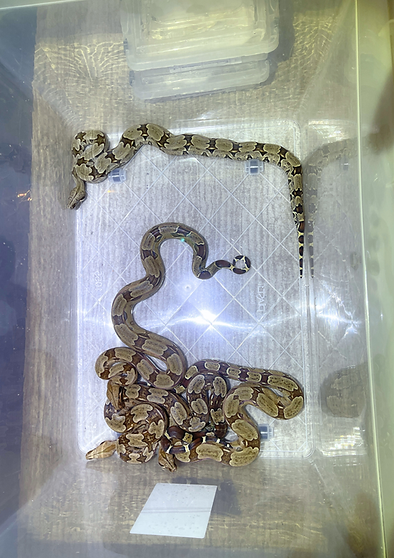
Boa c. amarali F1
Location: Minas Gerais Brazil (Uberlândia City)